
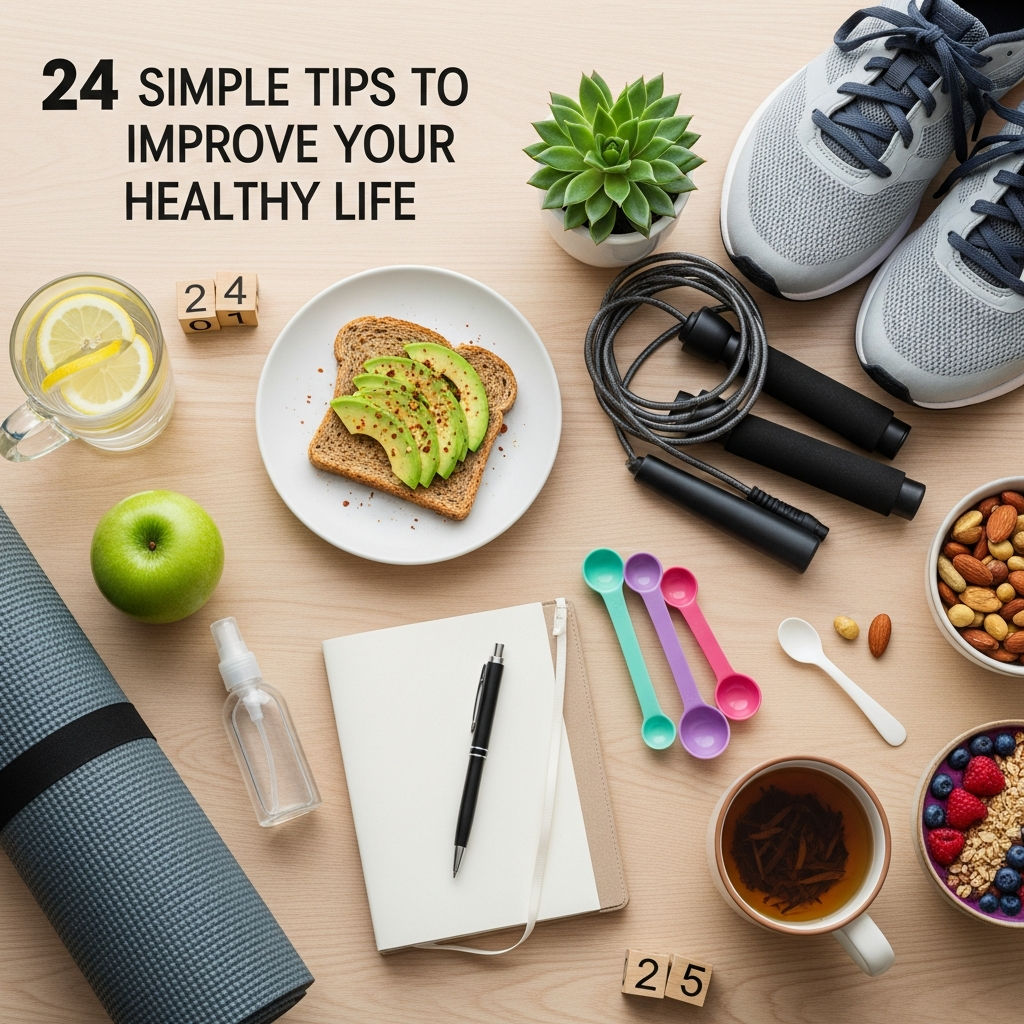
24 Simple Tips to Improve Your Healthy Life
Living a healthy life often feels like a daunting task. Between complex diet trends, high-intensity workout fads, and the constant pressure of social media, it is easy to feel overwhelmed. However, true wellness isn’t about drastic transformations overnight; it is about the small, sustainable habits you build every day. By focusing on simple changes, you can achieve long-term vitality without the burnout.
In this guide, we have compiled 24 practical and easy-to-implement tips to help you reclaim your health. Whether you are looking to boost your energy, improve your mental clarity, or simply feel better in your skin, these steps will pave the way to a better you.
1. Prioritize Hydration First Thing in the Morning
After six to eight hours of sleep, your body is naturally dehydrated. Start your day with a large glass of water before reaching for coffee. This jumpstarts your metabolism, flushes out toxins, and wakes up your brain.
2. Practice Mindful Eating
Instead of eating in front of the TV or your laptop, focus on your food. Chew slowly and appreciate the flavors. Mindful eating helps you recognize satiety signals, preventing overeating and improving digestion.
3. Walk for 10 Minutes After Meals
A short walk after lunch or dinner can significantly lower blood sugar levels and aid digestion. It’s a simple way to increase your daily step count without needing a gym membership.
4. Incorporate More Whole Foods
Try to eat foods in their most natural state. Focus on fruits, vegetables, legumes, nuts, and seeds. The less processed a food is, the more nutrients it retains to fuel your body.
5. Optimize Your Sleep Environment
Quality sleep is the foundation of health. Ensure your bedroom is cool, dark, and quiet. Consider using blackout curtains or a white noise machine to create a sanctuary for rest.
6. Take the Stairs
Functional movement is key. Choosing the stairs over the elevator is a small decision that builds cardiovascular health and leg strength over time.
7. Start a Gratitude Journal
Mental health is just as important as physical health. Writing down three things you are grateful for each day shifts your focus from what is lacking to what is abundant, reducing stress and anxiety.
8. Reduce Liquid Calories
Sugary sodas, energy drinks, and flavored lattes add hundreds of empty calories to your diet. Swap them for herbal tea, sparkling water with lemon, or plain black coffee.
9. Stand Up Every Hour
If you have a desk job, set a timer to stand up and stretch every 60 minutes. Prolonged sitting is linked to various health issues; movement breaks keep your blood flowing and your muscles engaged.
10. Eat the Rainbow
Different colored vegetables contain different phytonutrients. By aiming for a colorful plate, you ensure that you are getting a wide spectrum of vitamins and antioxidants necessary for immune function.
11. Limit Screen Time Before Bed
The blue light emitted by phones and tablets interferes with melatonin production. Try to put away electronic devices at least one hour before sleep to improve your sleep quality.
12. Practice Deep Breathing
When you feel stressed, take five deep, diaphragmatic breaths. This simple act activates the parasympathetic nervous system, lowering your heart rate and calming your mind instantly.
13. Cook More at Home
When you prepare your own meals, you have total control over the ingredients, particularly salt, sugar, and unhealthy fats. It’s also a great way to save money while eating healthier.
14. Find a Form of Exercise You Enjoy
Exercise shouldn’t feel like a punishment. Whether it’s dancing, swimming, hiking, or yoga, finding an activity you genuinely love makes it much easier to stay consistent.
15. Prioritize Protein in Every Meal
Protein is essential for muscle repair and keeping you full. Including a source of protein—like eggs, beans, tofu, or lean meats—helps stabilize blood sugar and prevents mid-day energy crashes.

16. Connect with Nature
Spending time outdoors, even if it’s just a park, can lower cortisol levels and improve your mood. Vitamin D from sunlight is also crucial for bone health and immune support.
17. Practice the 80/20 Rule
Healthy living is about balance, not perfection. Aim to eat nutritious foods 80% of the time, and allow yourself to enjoy your favorite treats the other 20%. This prevents the “all or nothing” mentality that leads to quitting.
18. Carry a Reusable Water Bottle
You are more likely to drink water if it is readily available. Keep a reusable bottle with you at all times to ensure you stay hydrated throughout the day.
19. Learn to Say No
Protecting your time and energy is vital for mental well-being. Overcommitting yourself leads to burnout. It is okay to decline invitations or projects that don’t align with your health goals.
20. Add Instead of Subtract
Instead of focusing on what you “can’t” eat, focus on what you can add. Add a side of greens to your pizza or a handful of berries to your yogurt. This creates a mindset of abundance rather than restriction.
21. Stretch Daily
Flexibility decreases as we age. Dedicating five minutes to stretching in the morning or evening improves circulation, reduces the risk of injury, and keeps your joints healthy.
22. Foster Social Connections
Humans are social creatures. Spending quality time with friends and family reduces feelings of loneliness and has been linked to increased longevity and better cognitive health.
23. Limit Processed Sugars
High sugar intake is linked to inflammation and chronic disease. Check food labels for hidden sugars and try to satisfy your sweet tooth with natural sources like fruit.
24. Be Kind to Yourself
Health is a journey with ups and downs. If you have an “off” day, don’t beat yourself up. Acknowledge it and move forward. Consistency beats intensity every single time.
Conclusion: Start Small for Big Results
Improving your health doesn’t require a total life overhaul. By implementing even a few of these 24 tips, you create a ripple effect that leads to better habits and a higher quality of life. Remember, the goal is progress, not perfection. Choose two or three tips to start with this week, and once they feel like second nature, add a few more. Your future self will thank you for the effort you put in today.
Frequently Asked Questions About a Healthy Lifestyle
How long does it take to form a new healthy habit?
While the popular myth says 21 days, research suggests it actually takes about 66 days on average for a new behavior to become automatic. The key is to stay consistent even when motivation dips.
What is the most important factor in a healthy life?
Consistency is the most important factor. No single meal or workout defines your health; it is the sum of your daily choices over weeks, months, and years.
Can I be healthy without going to the gym?
Absolutely. Physical activity can include gardening, walking the dog, playing a sport, or doing bodyweight exercises at home. The goal is to move your body regularly in ways that you enjoy.
How much water should I actually drink?
While the “8 glasses a day” rule is a good baseline, hydration needs vary based on your activity level, climate, and body weight. A good rule of thumb is to check your urine; it should be pale yellow, like lemonade.
Is sleep really that important for weight loss?
Yes. Lack of sleep disrupts hormones that control hunger (ghrelin) and fullness (leptin). When you are sleep-deprived, you are more likely to crave high-calorie, sugary foods and have less willpower to resist them.